Measured with Electromyography
The posterior deltoid is one of the most underdeveloped muscles in many shoulder training and rehabilitation programs.
In theory, it is trained with many back exercises. In practice, many patients and athletes barely activate it.
The result is a very common pattern seen in many patients and athletes: dominance of the other portions of the deltoid appears, accompanied by upper trapezius overload, while the posterior deltoid shows deficits in strength and control during shoulder retraction and posterior stabilization movements.
This combination alters shoulder mechanics and may promote:
- – Compensations.
- – Cervical discomfort.
- – Reduced stability of the glenohumeral joint.
- – Poorer performance in pulling exercises.
For this reason, it is important to know which exercises truly activate the posterior deltoid.
Thanks to electromyography (EMG), you can compare the relative muscle activation of different exercises and select the most effective ones when the goal is hypertrophy and specific strengthening.
In this post, you will find a list of six exercises ranked by posterior deltoid activation level, so you can use them with your patients, or for your own training.
Now think about this:
How many patients do you think believe they are training a specific muscle… when in reality they are compensating with others?
What Electromyography Measures in These Exercises
EMG records the electrical activity generated by a muscle when it contracts.
This allows you to understand:
- – Which muscle is activating.
- – How much it activates.
- – How it compares with other exercises.
When an exercise produces higher EMG activity, it means the muscle is receiving a greater neuromuscular stimulus.
This does not automatically mean greater hypertrophy, but it does indicate that the exercise has the potential to generate higher muscular tension, which is one of the key factors for muscle growth.
6 Exercises With the Highest Posterior Deltoid Activation
1. Seated Reverse Fly
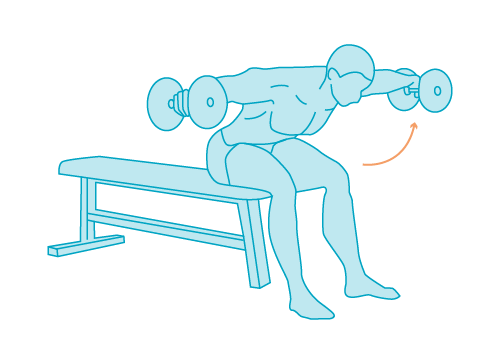
Posterior deltoid EMG activation: 82% of Maximum Voluntary Contraction (MVC)
This exercise shows the highest posterior deltoid activation in this analysis.
Technical keys
- – Lean the torso forward.
- – Keep the scapulae stable.
- – Perform the movement in a controlled way without momentum.
Common mistakes
- – Elevating the shoulders and activating the upper trapezius.
- – Using too much weight.
- – Turning the movement into a pulling motion.
When executed correctly, the seated reverse fly is one of the best exercises for specific posterior deltoid hypertrophy.
2. 45° Bent-Over Row
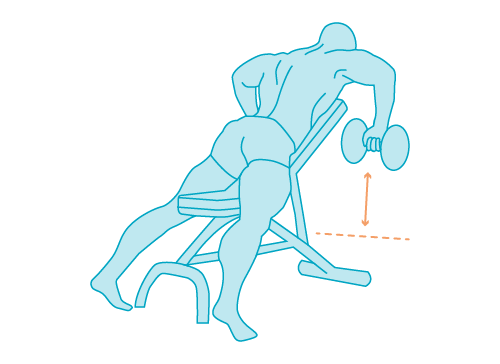
Posterior deltoid EMG activation: 80%
This exercise produces very high posterior deltoid activation when the trunk angle is correct.
Technical keys
- – Torso inclined about 45°.
- – Pull the elbows backward.
- – Avoid shrugging the shoulders.
When the movement vector is directed toward the upper abdomen or lower chest, posterior deltoid activation increases significantly.
3. Battling Rope
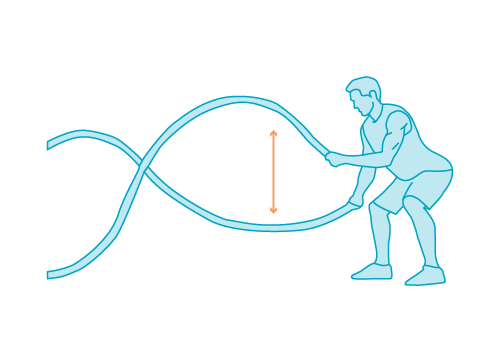
Posterior deltoid EMG activation: 60%
Although it is not usually considered a hypertrophy-specific exercise, battling rope work generates considerable posterior deltoid activation.
Why this happens
- – Repeated scapular stabilization.
- – Continuous activation of the posterior shoulder.
- – Isometric work combined with explosive movement.
It can be useful in metabolic training, late-stage rehabilitation, and general physical preparation.
However, for pure hypertrophy, it is usually combined with more specific exercises.
4. Cable Diagonal Raise
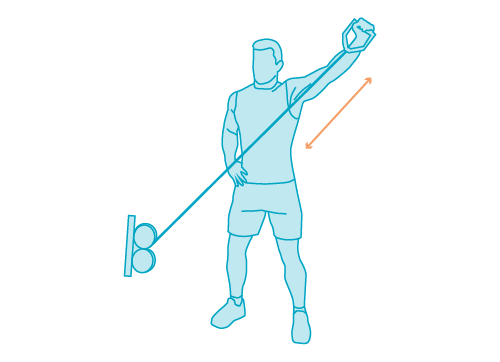
EMG activation: 52%
This exercise introduces a diagonal movement pattern that reproduces functional shoulder movements.
Benefits
- – Improves scapulohumeral coordination.
- – Activates the posterior deltoid together with the external rotators.
- – Provides constant tension due to the cable.
It is a good option when the goal is neuromuscular control and shoulder coordination, in addition to hypertrophy.
5. Dumbbell Lateral Raise
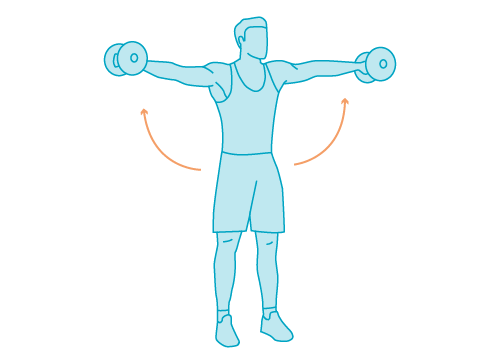
Posterior deltoid EMG activation: 47%
Although lateral raises are typically considered a middle deltoid exercise, they also activate the posterior deltoid.
This occurs especially when the torso is slightly inclined forward, the elbows move slightly backward, and the movement is performed in the scapular plane.
6. Upright Row
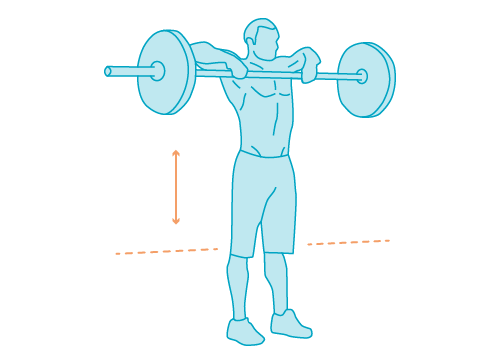
Posterior deltoid EMG activation: 42%
This exercise mainly activates the middle deltoid and upper trapezius, but it can also involve the posterior deltoid depending on technique.
Considerations
If the goal is to target the posterior shoulder:
- – Use a slightly wider grip.
- – Raise the elbows outward.
Even so, there are more specific and effective exercises for this muscle.
How EMG Helps Optimize These Exercises
Electromyography allows you to verify which muscle is actually activating during an exercise, how strongly it activates, and whether muscle compensations appear that may alter the movement pattern.
This information is especially valuable when working with muscles that often remain “hidden” by the action of more dominant muscles.
With these data, you can:
- – Choose the most effective exercises
- – Adjust technique in real time
- – Confirm whether the stimulus the muscle receives is sufficient to produce a real adaptation
Instead of assuming that an exercise is working, EMG allows you to objectively see whether the muscle is responding as expected.
The posterior deltoid is a key muscle for shoulder health and performance, but it is often undertrained.Exercises showing the highest EMG activation include:
- 1. Seated reverse fly: 82%
- 2. 45° bent-over row: 80%
- 3. Battling rope: 60%
- 4. Cable diagonal raise: 52%
- 5. Lateral raises: 47%
- 6. Upright row: 42%
- 7. Dips: 26%
Choosing the right exercises can make a major difference in muscle development and injury prevention.
But even more important than choosing exercises is knowing which muscle is actually working.
Because in training and rehabilitation, success does not come from doing more exercises.
It comes from activating the right muscle with the right stimulus.