Use it now with your patients with hallux valgus
Hallux valgus is one of the most common foot pathologies seen in clinical practice. It is characterized by the progressive deviation of the big toe toward the other toes, creating a deformity that affects not only aesthetics but also function.
Many patients seek help due to pain, difficulty walking, or problems with footwear. However, one of the most important (and often underestimated) aspects is that hallux valgus is not only a structural alteration. In many cases, there is a key muscular component that explains its progression.
And this is where the abductor hallucis comes into play.
The role of the abductor hallucis in foot control
The abductor hallucis is an intrinsic foot muscle whose main function is to help keep the big toe aligned and stabilize the first metatarsal.
When this muscle functions properly, it helps maintain proper foot mechanics during gait and ensures that loads are efficiently distributed across the forefoot.
The problem arises when it loses strength or coordination. At that point, the big toe tends to progressively deviate laterally, altering the load pattern and creating overload in other structures.
This not only worsens the deformity, but can also lead to pain, instability, and difficulties in daily activities.
That’s why strengthening the abductor hallucis is not optional—it is a central part of treatment.
Do all exercises activate this muscle equally?
In clinical practice, there are many exercises aimed at training the intrinsic foot muscles, but not all of them generate the same level of activation or stimulate the muscle in the same way.
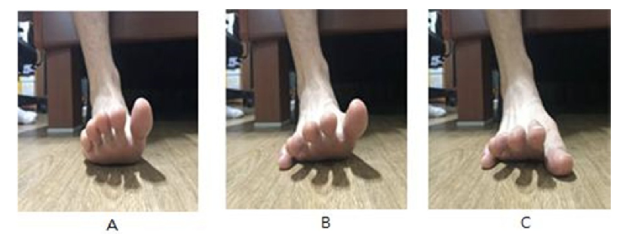
The toe spread out, for example, focuses on actively separating the toes, placing special emphasis on hallux abduction. It is useful for improving motor control and the ability to isolate the big toe, although for many patients it is initially difficult due to a lack of muscle awareness.
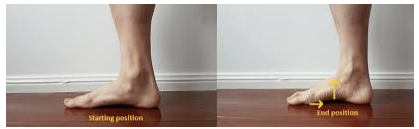
The short foot exercise focuses on shortening the foot by activating the plantar arch without flexing the toes. It is a more global exercise aimed at improving foot stability and coordinated activation of the intrinsic muscles. However, this global nature means that, in some cases, the abductor hallucis is not the main contributor, but rather part of a broader synergy.
On the other hand, big toe flexion exercises, especially when performed against resistance or under load, tend to involve extrinsic muscles to a greater extent, such as the flexor hallucis longus. This can create a false sense of specific activation of the target muscle, when in reality other structures are being recruited that do not directly contribute to correcting the alignment of the first ray.
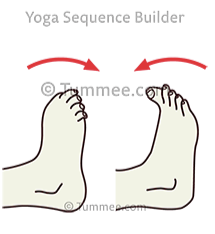
However, a key question remains: which of these exercises most effectively activates the abductor hallucis?
To answer this, different exercises were compared using electromyography, analyzing both muscle activation and the ability to generate force.
The results were clear: not all exercises produce the same stimulus.
The most effective exercise: forefoot adduction
Among the different options analyzed, forefoot adduction was the exercise that showed the highest activation of the abductor hallucis.
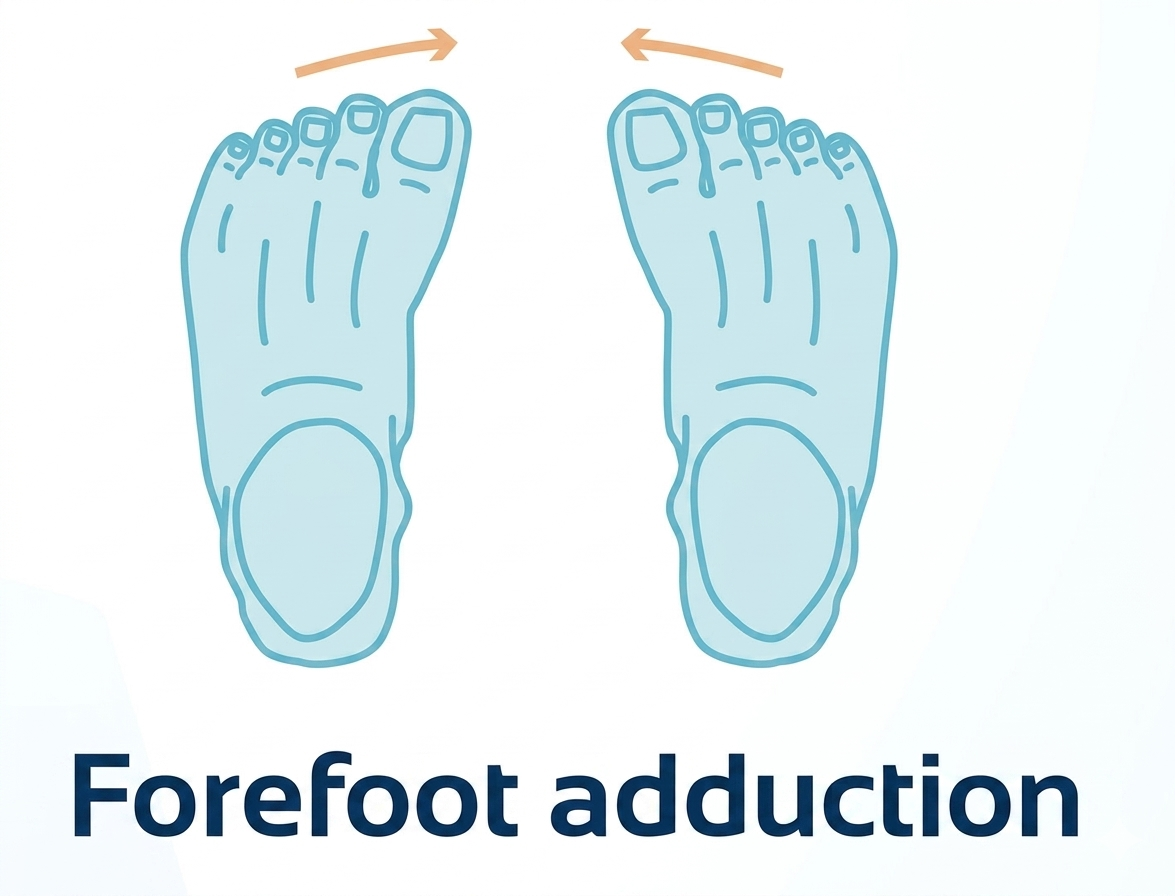
It not only achieved the highest average activation, but also improved the muscle’s maximum voluntary contraction capacity. This indicates that it not only activates more, but may also contribute to improving real strength.
Another important aspect is its clinical applicability. Unlike other exercises that require greater mobility or control, forefoot adduction is more accessible for patients with advanced deformities or pain.
This makes it an especially useful tool both in early stages and in pre- and post-surgical processes.
The key to this exercise lies in its simplicity and in how it adapts to the patient’s limitations.
Forefoot adduction requires less movement of the first radius, which reduces technical difficulty and pain during execution. This makes it easier for the patient to activate the muscle without compensations.
In addition, being a more direct movement, it allows the work to focus on the motor control of the first metatarsal, improving foot stability.
In many more complex exercises, the patient needs to coordinate several movements at once, which can make specific activation of the abductor hallucis more difficult. Here, the opposite happens: less complexity, more efficiency.
How to integrate it into your clinical practice
This exercise can be used as a foundation in the treatment of hallux valgus, especially in phases where the goal is to restore muscle activation.
As the patient improves control, other complementary exercises can be introduced to work on overall foot function. However, if the abductor hallucis is not properly activated from the start, the rest of the program loses effectiveness.
This is where many treatments fail. General exercises are introduced without first ensuring that the key muscle is functioning.
One of the biggest challenges in foot rehabilitation is knowing whether the exercise is achieving its objective.
The patient may perform it correctly from a technical standpoint, but that does not guarantee that the target muscle is being activated.
Electromyography (EMG) allows you to verify this objectively. You can see whether the abductor hallucis activates, how much it activates, and how it evolves over time.
This eliminates trial and error and allows you to adjust treatment with precision.
Conclusion
Hallux valgus is not only a structural deformity. In many cases, it is associated with an alteration in muscle function, especially in the abductor hallucis.
Strengthening this muscle is essential to improve toe alignment, optimize gait mechanics, and reduce the progression of the deformity.
Evidence shows that forefoot adduction is one of the most effective exercises to activate it, especially in patients with limitations or pain.
But beyond the exercise itself, the key is knowing whether it is actually working.
Because in rehabilitation, it’s not about doing more exercises.
It’s about making sure you are activating the right muscle.
Here’s an important question: how much time are you investing in foot exercises without knowing whether they are producing real muscular change?
If you don’t measure, it’s easy to repeat strategies that are not working.