Are you sure your patient is gaining muscular strength?
Many physiotherapists and rehab professionals assume a patient is improving their strength because:
- They perform the exercise correctly.
- They say they “feel it working.”
- They increase the load, repetitions, or resistance.
But none of this guarantees a real neuromuscular improvement.
Feeling that an exercise “works” does not mean a muscle is receiving the minimum stimulus required to trigger strength adaptations.
This is probably one of the most common mistakes in rehabilitation: confusing perceived effort with real physiological adaptation.
In this post, you’ll learn how to be 100% sure that you’re achieving true neuromuscular strength gains.
By the way—do you want to know if your patients are really gaining strength?
We can help you measure it. Get the information about mDurance EMG here and start validating every exercise with real data, not assumptions.
Stay until the end, because you’ll learn how to achieve these results using EMG:
- ✅ More neuromuscular adaptations from the very first week
- ✅ Greater strength gains in less time
- ✅ Fewer sessions needed to restore function
- ✅ More motivated patients (because they see real data and objective progress)
- ✅ More precise and better-justified treatments
Doing an exercise does not mean activating a muscle enough
A patient can perform an exercise correctly, even reach fatigue, and still fail to activate the target muscle sufficiently.
The process often looks like this:
- ✅ The patient performs the exercise
- ✅ They say they feel the muscle working
- ✅ You assume strength is improving
❌ But… muscle activation is below the minimum level required to generate adaptation.
When activation is insufficient:
- There is no neuromuscular adaptation
- Muscle strength does not increase
- Rehabilitation is unnecessarily prolonged
The first 4–6 weeks only produce neuromuscular adaptations
But only if the muscle receives the right stimulus.
During the first weeks of a strength program, the muscle does not grow; instead, it:
- Recruits more motor units
- Improves intramuscular coordination
- Better synchronizes its activation pattern
These adaptations only occur if a minimum stimulation threshold is exceeded.
The literature is clear: if a muscle does not exceed 40% of its maximal voluntary contraction (MVC), no significant neuromuscular adaptations occur.
In other words, any exercise performed below 40% activation is insufficient to improve strength—no matter how well it appears to be executed.
How to really know if your patient is gaining strength
Observing technique or listening to patient feedback is not enough.
You need to measure:
- Which muscle is being activated
- How much it is activated
- Whether it exceeds the strength threshold
- Whether the load and exercise truly provide a useful stimulus
The most accurate and accessible clinical tool for this is surface electromyography (EMG).
EMG allows you to verify in seconds whether an exercise is sufficient to trigger neuromuscular adaptation.
Real EMG example: does the squat generate enough activation?
Case 1: Barbell squat (40 kg)
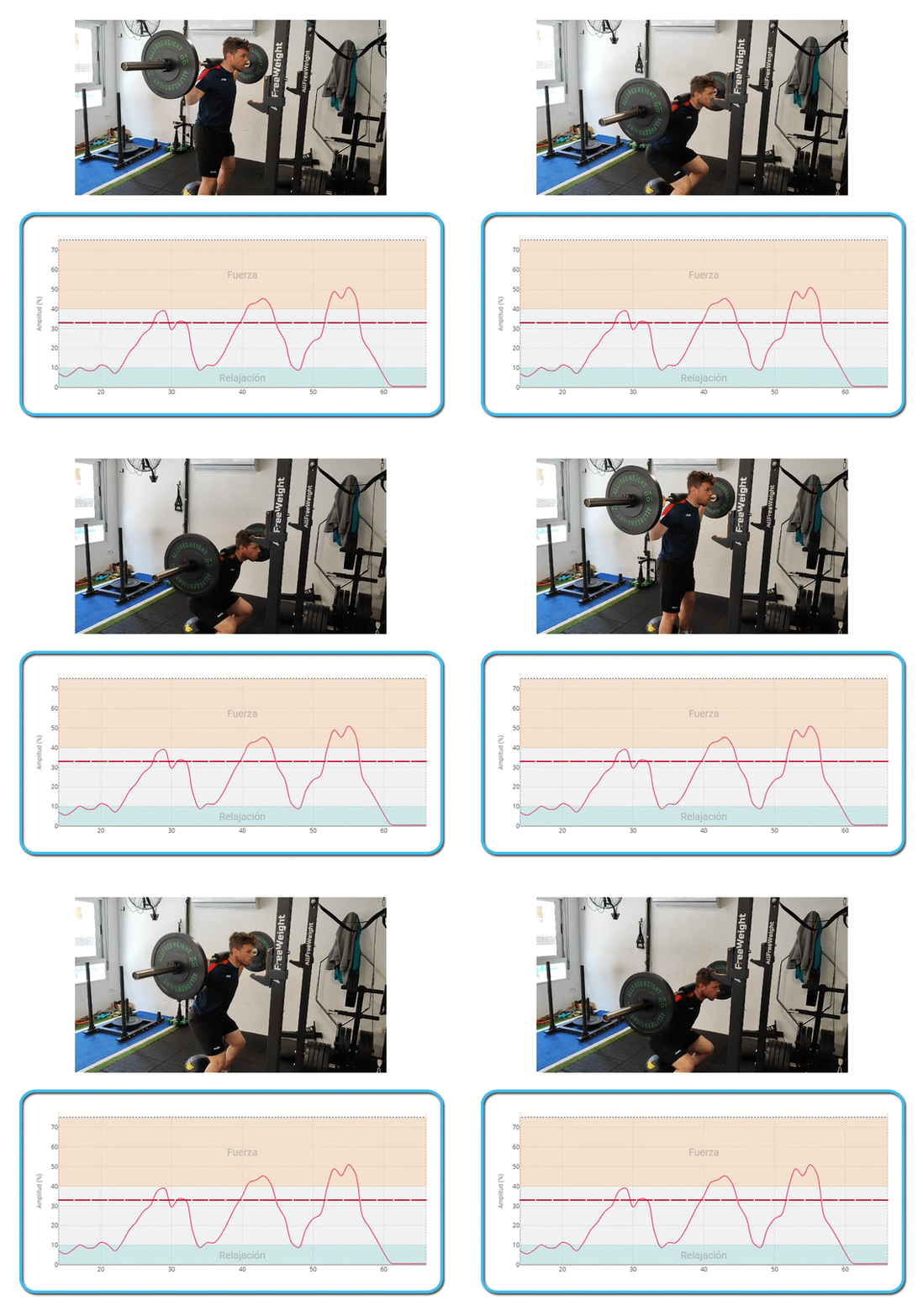
At first glance, it looks like a good exercise.
Good technique, good speed, visible effort.
But the data tell a different story:
Rectus femoris: 30% activation (below the required threshold).
Conclusion:
⚠️ Insufficient stimulus
⚠️ Recovery time is unnecessarily prolonged
Case 2: Barbell squat (80 kg)
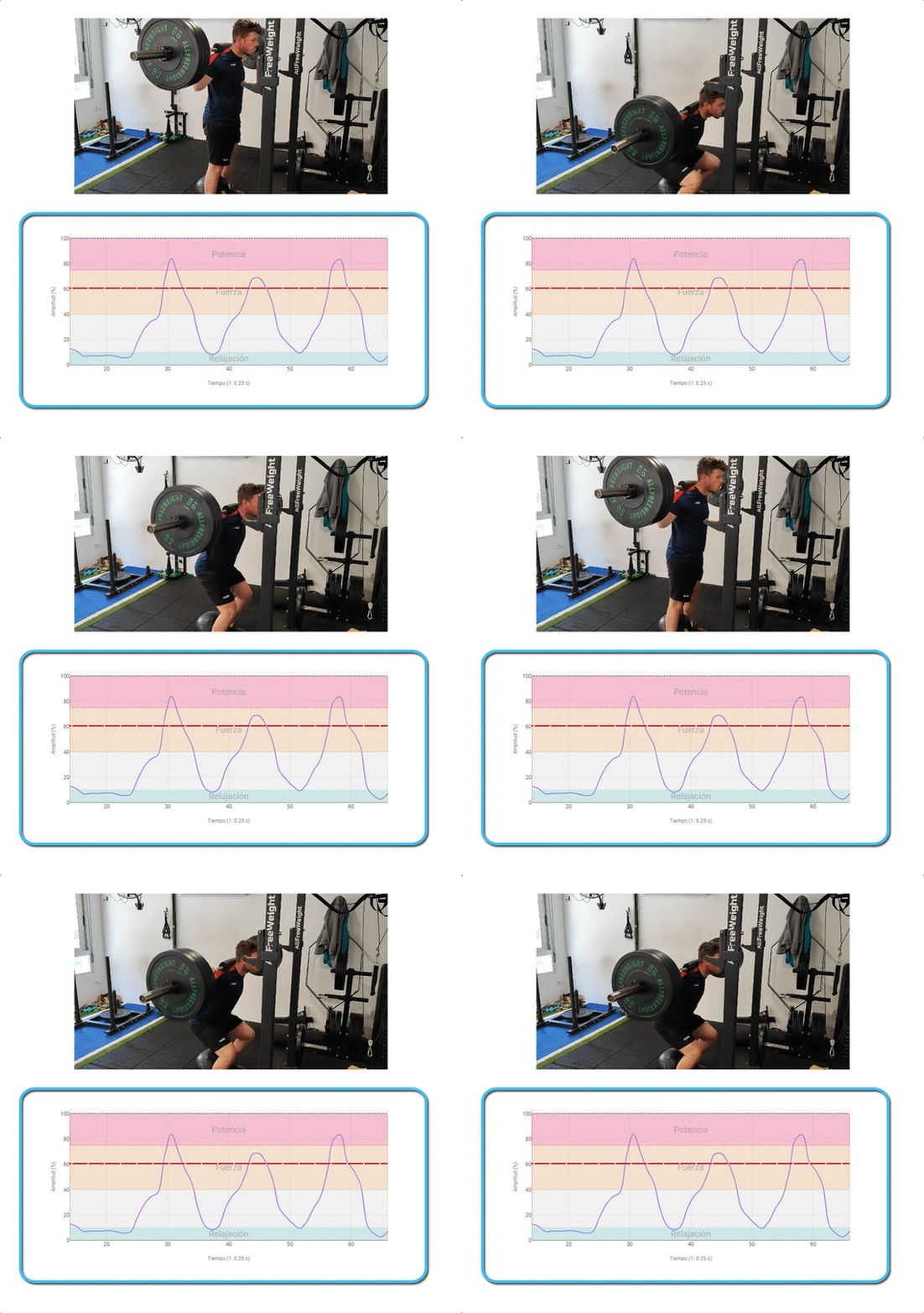
EMG results:
Rectus femoris: 52% activation (above the 40% threshold).
Conclusion:
- ✅ Adequate neuromuscular stimulus
- ✅ Adaptations occur
- ✅ Strength improves faster
This change in load, validated with EMG, makes the difference between training blindly and training with precision.
What EMG adds when assessing strength gains
Electromyography allows you to:
- Know which muscle is actually being activated
You avoid assuming an exercise targets one muscle when another is compensating. - Quantify muscle activation
You know exactly whether the adaptation threshold is exceeded. - Validate whether an exercise improves strength
Every repetition has a real neuromuscular purpose. - Adjust load with precision
You move from simply watching the patient sweat to knowing whether the muscle is truly responding.
You stop prescribing what seems appropriate and start prescribing what is effective.
Want to know if your patients are really gaining strength?
We can help you measure it.
Get the information about mDurance EMG here and start validating every exercise with objective data, not assumptions