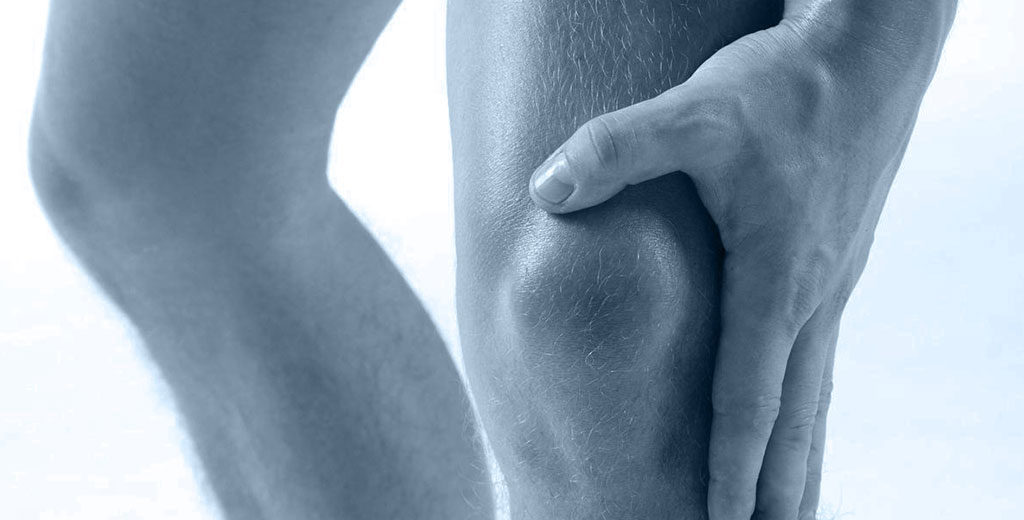
Are you prescribing exercises with the right load but without taking execution speed into account?
If so, your patient may not be reaching the muscle activation needed to progress, even if the exercise is appropriate and the weight is correct.
In this article you will learn how movement speed directly influences the activation of muscles such as the gluteus maximus, biceps femoris, semitendinosus and rectus femoris.
All with objective data obtained through surface electromyography (EMG) in three of the most commonly used exercises in rehabilitation and physical reconditioning: the squat, the hip thrust and the Bulgarian split squat.
Why execution speed matters more than you think
When you prescribe an exercise, you usually focus on two main variables: the exercise itself and the load used.
However, there is a third variable that is frequently overlooked and that has a direct impact on the neuromuscular response of the patient: execution speed.
Performing a squat at maximum speed is not the same as doing it slowly and in a controlled manner, even if the weight is identical.
The way the nervous system recruits motor units varies considerably depending on the rate of muscle contraction.
The problem is that, without objective tools, this difference is invisible. You cannot see it with the naked eye. You cannot assume it. You can only measure it.
The study: squat, hip thrust and Bulgarian split squat at two speeds
In a study conducted using the mDurance surface EMG system, muscle activation was compared across three common exercises performed with the same load but at two different speeds:
- – MV (Maximum Velocity): execution at maximum speed.
- – CV (Controlled Velocity): execution at a controlled speed with a fixed tempo.

The muscles monitored were:
- – Gluteus maximus.
- – Biceps femoris.
- – Semitendinosus.
- – Rectus femoris.
The results showed clear and clinically relevant differences between both conditions.
What happened with each exercise
Bulgarian split squat
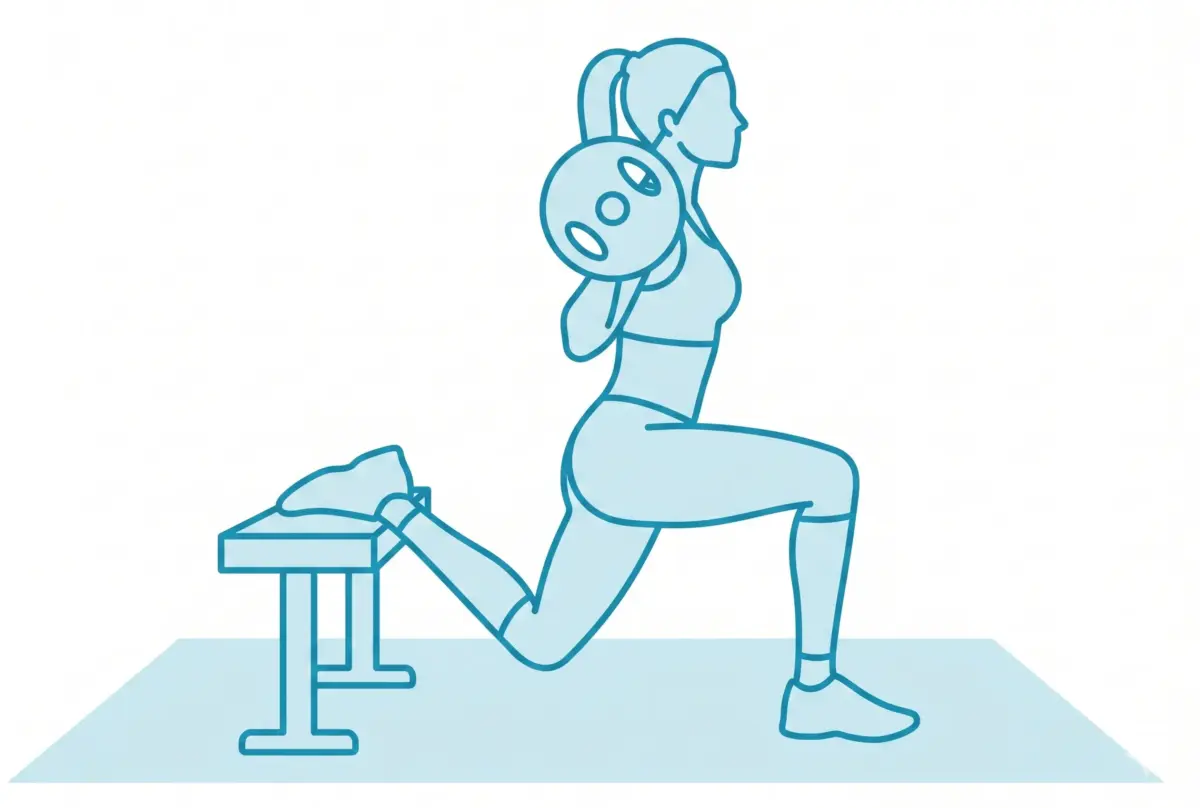
This was the exercise that showed the most consistent response to the change in speed.
All the muscles assessed significantly increased their activation when performed at maximum speed compared to controlled speed.This makes the Bulgarian split squat at high speed a particularly efficient exercise when the goal is to globally activate the posterior chain and the quadriceps simultaneously.
Conventional squat
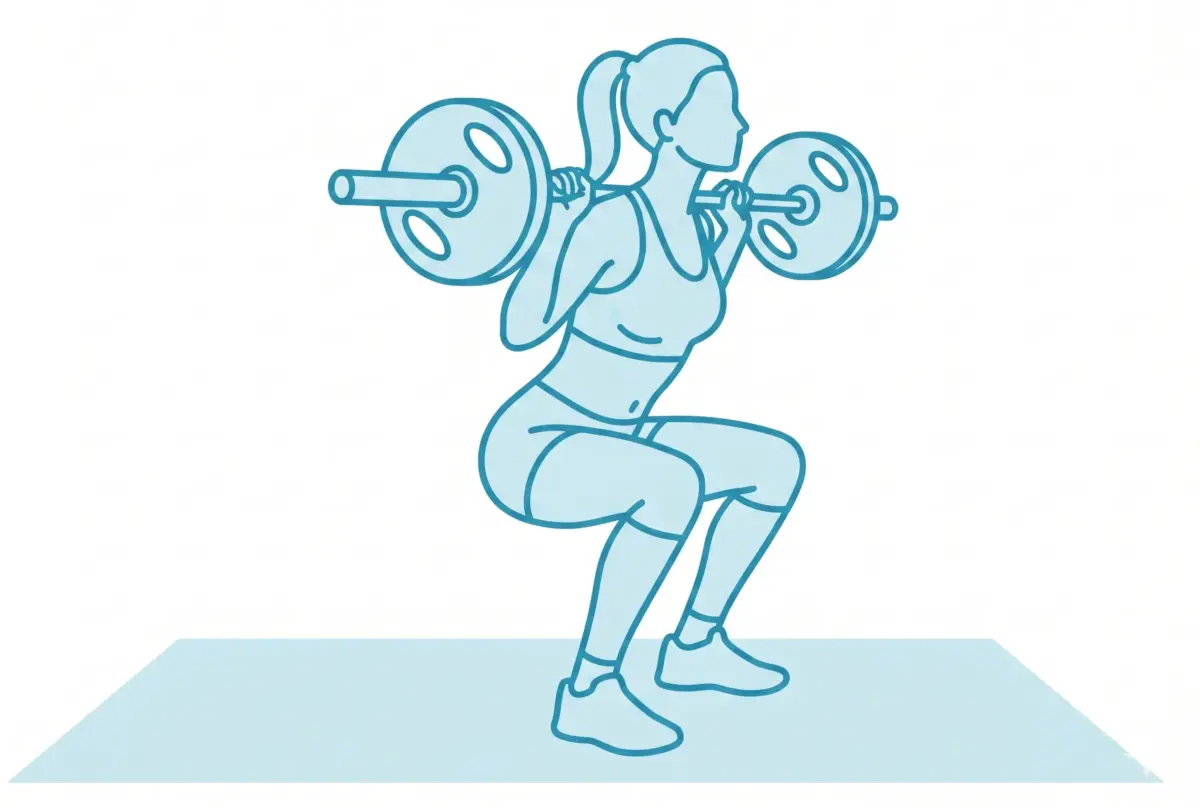
In the squat, the effect of speed was more selective.
Only the gluteus maximus and biceps femoris increased their activation when moving to maximum speed. The semitendinosus and rectus femoris showed no significant changes between conditions.
This finding has important practical implications: if the therapeutic goal is the gluteus maximus or the biceps femoris, the squat at maximum speed may be more effective than increasing the load.
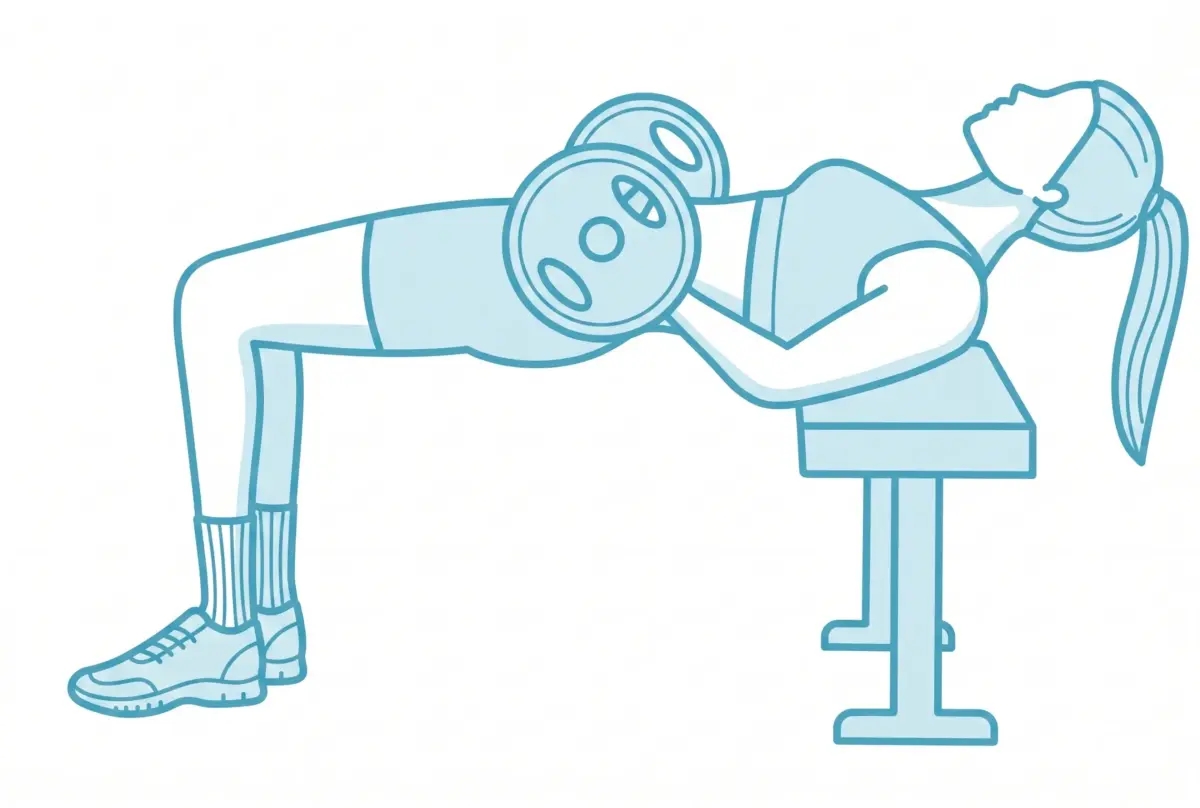
Hip thrust
What happens when speed is not taken into account
This is the most common clinical scenario: the professional selects the right exercise for the target muscle, adjusts the load appropriately, but does not consider execution speed.
The result may be that the patient fails to reach the muscle activation threshold needed to generate neuromuscular adaptations.
In practical terms, this translates into:
- – Slower than expected progression.
- – A plateau with no apparent cause.
- – The feeling that the exercise “is not working” when in reality the missing parameter is execution tempo.
Muscle activation does not depend solely on load. It also depends on contraction time, movement intent and, as this study demonstrates, execution speed.
Practical clinical application: the gluteus maximus example
Suppose the goal is to strengthen the gluteus maximus in a patient in the reconditioning phase following an injury. The usual approach might be to progressively increase the load in the hip thrust.
However, the data from the study suggest an equally effective strategy with lower mechanical risk: maintaining a moderate load and introducing maximum speed as the progression variable.
The result is greater gluteus maximus activation without the need to increase the weight, which can be particularly valuable in the early stages of reconditioning when the tissue is not yet prepared for high loads.
This is precisely the advantage of working with real-time EMG data: it allows you to fine-tune the prescription without increasing mechanical stress on structures that are still recovering.
How EMG allows you to use speed as a therapeutic lever
The mDurance system allows you to visualise in real time the activation of each muscle during exercise execution. This makes it possible to:
Verify which muscles are actually activating in each phase of the movement and at which speed, not just which ones should be activating according to theory.
Adjust speed according to the target muscle, based on data rather than estimation. If the gluteus maximus is not reaching the expected activation levels at controlled speed, the answer may lie in modifying the tempo before modifying the load.
Progress precisely and safely, using speed as an independent variable from load. This considerably broadens the range of progression available, which is especially useful when loads must remain low due to physical condition or phase of recovery.
Frequently asked questions
Is maximum speed always better for activating muscles? Not necessarily. The data from this study shows that the effect depends on the exercise and the target muscle. In some cases, such as the hip thrust, maximum speed specifically benefits the gluteus maximus but not the hamstrings. The key is knowing the therapeutic goal and choosing the speed based on that goal.
Can this approach be applied to patients in the acute phase? Maximum speed must always be contextualised within the patient’s recovery phase. In early stages, it may not be tolerable. However, the concept of using speed as an independent progression variable from load remains valid even at moderate tempos, provided the muscle response is monitored with EMG.
What if the patient cannot perform the movement at maximum speed? In that case, EMG is particularly useful for finding the patient’s real activation threshold at different speeds and loads, and for designing a progression suited to their current capacity.
Which clinical profiles benefit most from this type of analysis? This approach is especially valuable in sports rehabilitation, recovery from muscle injuries, strengthening programmes for musculoskeletal pain and any context where maximising muscle activation in a controlled and progressive manner is required.
Conclusion
Execution speed is not a minor detail in therapeutic exercise prescription. It is a variable with a direct impact on muscle activation that, in most clinical contexts, is neither measured nor adjusted in a systematic way.
The data obtained with EMG in the squat, hip thrust and Bulgarian split squat demonstrate that changing execution speed can produce significant increases in the activation of key muscles such as the gluteus maximus and biceps femoris, without any need to increase the load.
Incorporating this variable into clinical reasoning, and measuring it with objective tools, makes it possible to design recovery programmes that are more precise, safer and more effective.
Because when you measure what is happening in the muscle, you can adjust what happens in the session. And when that happens, your patients improve faster.