How many of your patients with low back pain actually have a multifidus activation problem without you knowing it?
After analysing dozens of cases, we found a pattern that repeats itself: in the majority, the multifidus simply does not activate sufficiently. And it is impossible to detect with the naked eye.
Visually, everything seems fine. The patient moves and performs the exercises. But underneath there is a completely altered neuromuscular pattern that perpetuates the lumbar problem session after session and may be limiting the patient’s improvement.
In this article you will discover which exercises actually activate the multifidus according to surface EMG data, at what percentage they do so and how to use that information to design lumbar re-education programmes that truly work.
Why the multifidus is a key muscle in low back pain
The multifidus is the primary segmental stabiliser of the lumbar spine. Its function is not to generate movement but to control the position of each vertebra during movement. When it fails, the spine loses segmental control and other more superficial muscles, such as the spinal erector or quadratus lumborum, take on that load compensatorily.
The result is a common pattern in patients with chronic low back pain: tense, hyperactivated superficial muscles trying to stabilise what the multifidus should be controlling.
The problem is that the multifidus is deep, small and difficult to palpate. You cannot know with certainty whether it is activating simply by observing the patient. You need to measure it.
Multifidus activation ranking by exercise
🥇 1. Lumbar extension: 90% MVC
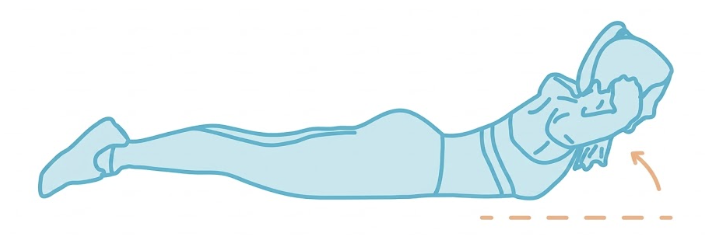
Lumbar extension is the exercise that generates the greatest multifidus activation, at 90% MVC. This is a high activation level that places it above the threshold needed to generate neuromuscular adaptations.
Its effectiveness is explained by the direct demand it places on the deep lumbar extensors: to control the extension movement of the spine, the multifidus has to work at full capacity.
It is the most appropriate exercise when the goal is to strengthen and re-educate these muscles in patients who already tolerate direct load on the lumbar spine.
🥈 2. Lumbar extension with hip and arm extension: 87% MVC
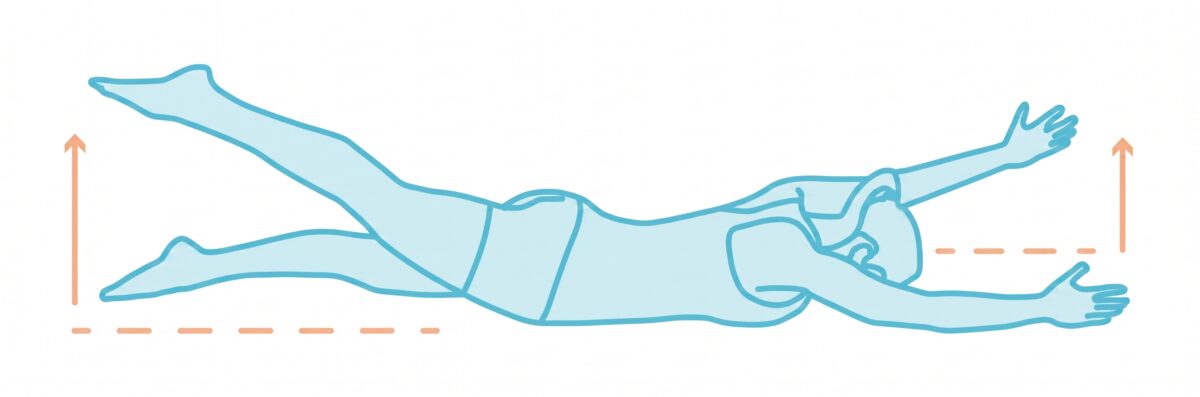
The variation with simultaneous contralateral hip and arm extension reaches 87% MVC, practically on a par with isolated lumbar extension.
The addition of contralateral arm and leg movement adds a rotational control demand that also forces the multifidus to work in the transverse plane.
It is a natural progression from pure lumbar extension and better replicates functional movement patterns where the lumbar spine needs to stabilise while the limbs are moving.
🥉 3. Glute bridge with leg raise: 60% MVC
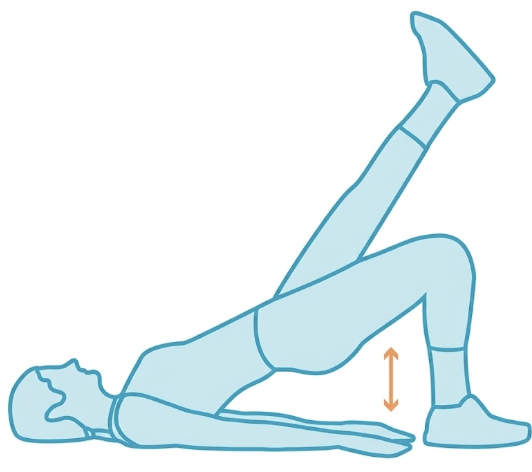
The glute bridge with single-leg elevation generates 60% MVC in the multifidus. The unilateral leg raise introduces a load asymmetry that forces the lumbar stabilisers to work to keep the pelvis level.
It is a valid option for intermediate programme phases, particularly useful when the goal is to combine multifidus activation with gluteal and pelvic stabiliser work.
4. Four-point kneeling superman: 46% MVC
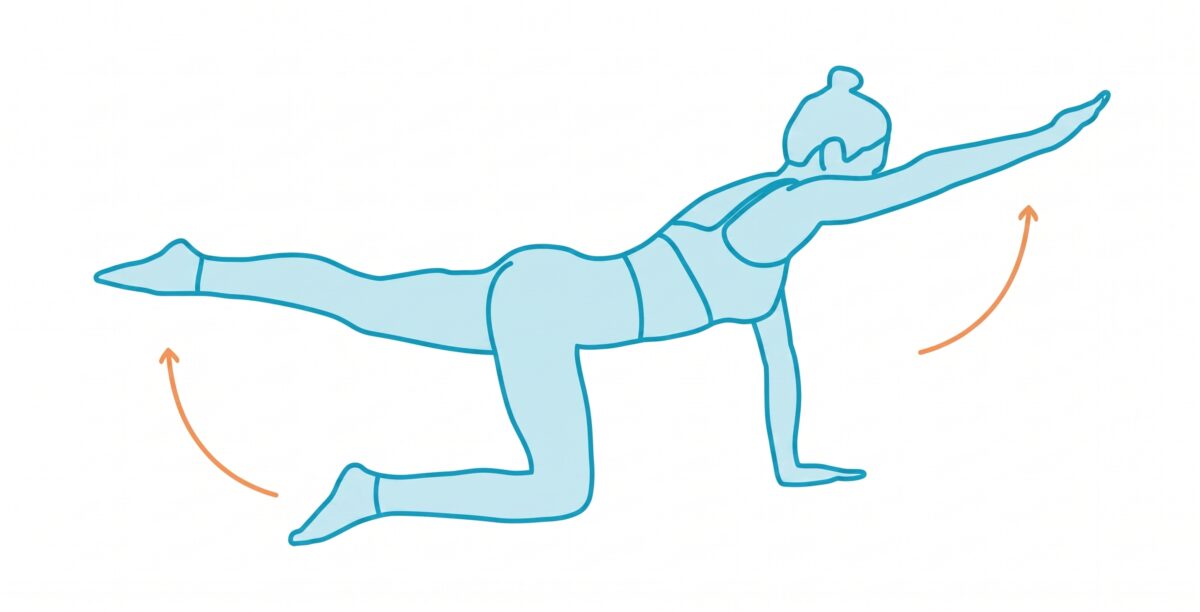
The four-point kneeling exercise with contralateral arm and leg extension, also known as the bird dog, generates 46% MVC in the multifidus. It is one of the most commonly prescribed exercises in lumbar rehabilitation and the data confirm that it has a moderate activation level, sufficient for early phases or for patients with low load tolerance.
Its advantage is that the four-point kneeling position unloads the spine from body weight while demanding active segmental control, making it especially useful in early phases or in patients with lumbar irritability.
5. Glute bridge: 40% MVC
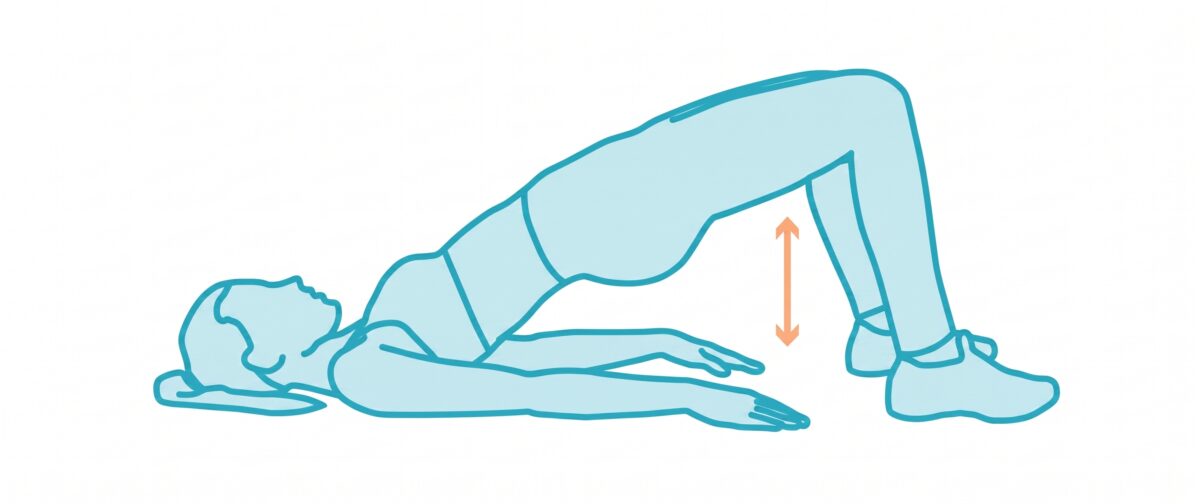
The bilateral glute bridge generates the lowest activation in the ranking: 40% MVC in the multifidus. Its demand on lumbar stabilisation is lower because the bilateral base of support reduces the requirement for segmental control.
It has its place as an introductory exercise or neuromuscular warm-up, but it is not sufficient as the primary re-education exercise for the multifidus in patients with a real activation deficit.
How to use this data in your clinical practice
The ranking gives you a clear roadmap for designing progressions based on real multifidus demand:
Early phase: glute bridge and four-point kneeling bird dog to introduce lumbar stabilisation work with moderate load and positions that allow irritability to be managed.
Intermediate phase: glute bridge with leg raise to increase demand without loading the spine directly in extension.
Advanced phase: lumbar extension and lumbar extension with arm and leg to reach activation levels sufficient to generate real neuromuscular adaptations.
But there is a problem with any progression based on reference values: you do not know whether your specific patient is reaching those activation levels. Two patients can perform the same exercise and obtain completely different muscular responses. Technique, fatigue level, pain inhibition and individual compensatory strategies all modify the real multifidus activation in ways you cannot predict without measuring it.
EMG gives you that data in real time. It allows you to know not only which exercise to use, but whether that exercise is working for that patient at that moment.
Frequently asked questions
How do I know whether my patients actually have a multifidus activation deficit? Without EMG, you cannot know with certainty. Palpation has significant limitations in such a deep and small muscle. Movement observation tells you whether there are visible compensations, but not what the muscle is doing. Surface EMG with correctly positioned electrodes gives you that information directly.
Does low back pain inhibit multifidus activation? Yes. There is solid evidence that low back pain can generate reflex inhibition of the multifidus. This creates a vicious cycle: pain inhibits the stabilising muscle, the spine loses segmental control and this generates more load and more pain. Breaking that cycle requires active re-education of the activation pattern, not just pain management.
Does the multifidus recover on its own when the pain disappears? Not necessarily. Studies on low back pain show that multifidus atrophy and inhibition can persist even when pain has subsided. Without specific training, the activation deficit remains and increases the risk of recurrence.
Is lumbar extension safe for patients with low back pain? It depends on the phase and cause of the pain. In acute phases or with high irritability, it may not be the most appropriate starting exercise. In subacute or chronic phases where the goal is neuromuscular re-education, it is the exercise that activates the multifidus the most and its progressive use is supported by the evidence. EMG allows you to verify that the activation it generates is appropriate for the patient’s current phase.
Conclusion
The multifidus is the most important muscle in lumbar stabilisation and one of the most difficult to assess without objective tools. Its activation deficit is one of the most common findings in patients with chronic low back pain and one of the least detected in standard clinical practice.
The EMG data are clear: lumbar extension and its variation with hip and arm extension are the most effective exercises for activating the multifidus, with levels above 87% MVC. The bilateral glute bridge, on the other hand, at 40% MVC, is not sufficient as the primary exercise if the goal is to re-educate these muscles.
Knowing the ranking helps you prescribe better. Measuring it in your patient helps you know whether it is working.