One of the most common patient profiles seen in clinical practice is someone presenting with:
- – Chronic neck pain.
- – Constant feeling of neck tension.
- – Upper trapezius stiffness.
- – Tension headaches.
- – Scapular overload.
And, paradoxically, many of these patients actually need to strengthen their back.
The problem is that not all back exercises are appropriate when the upper trapezius is hyperactive.
In fact, some classic exercises activate the trapezius more than the latissimus dorsi, exactly the opposite of what we are trying to achieve.
Result:
- – More cervical tension.
- – More pain.
- – Less real stimulus for the latissimus dorsi.
- – A frustrated patient.
If you don’t control which muscle is dominating the movement, you may be reinforcing the problem instead of solving it.
The Common Mistake: Choosing “Classic” Exercises Without Analyzing Activation
One of the most frequent mistakes in clinical practice is assuming that a classic exercise is always a good option simply because it “works” for the general population. The standing dumbbell row is a very clear example.
At first glance, it seems ideal for training the latissimus dorsi: it is unilateral, allows a large range of motion, and load progression is easy.
However, in patients with cervical overload or upper trapezius hyperactivity, this exercise is not always as appropriate as it seems. The problem is not the exercise itself, but how patients usually perform it.
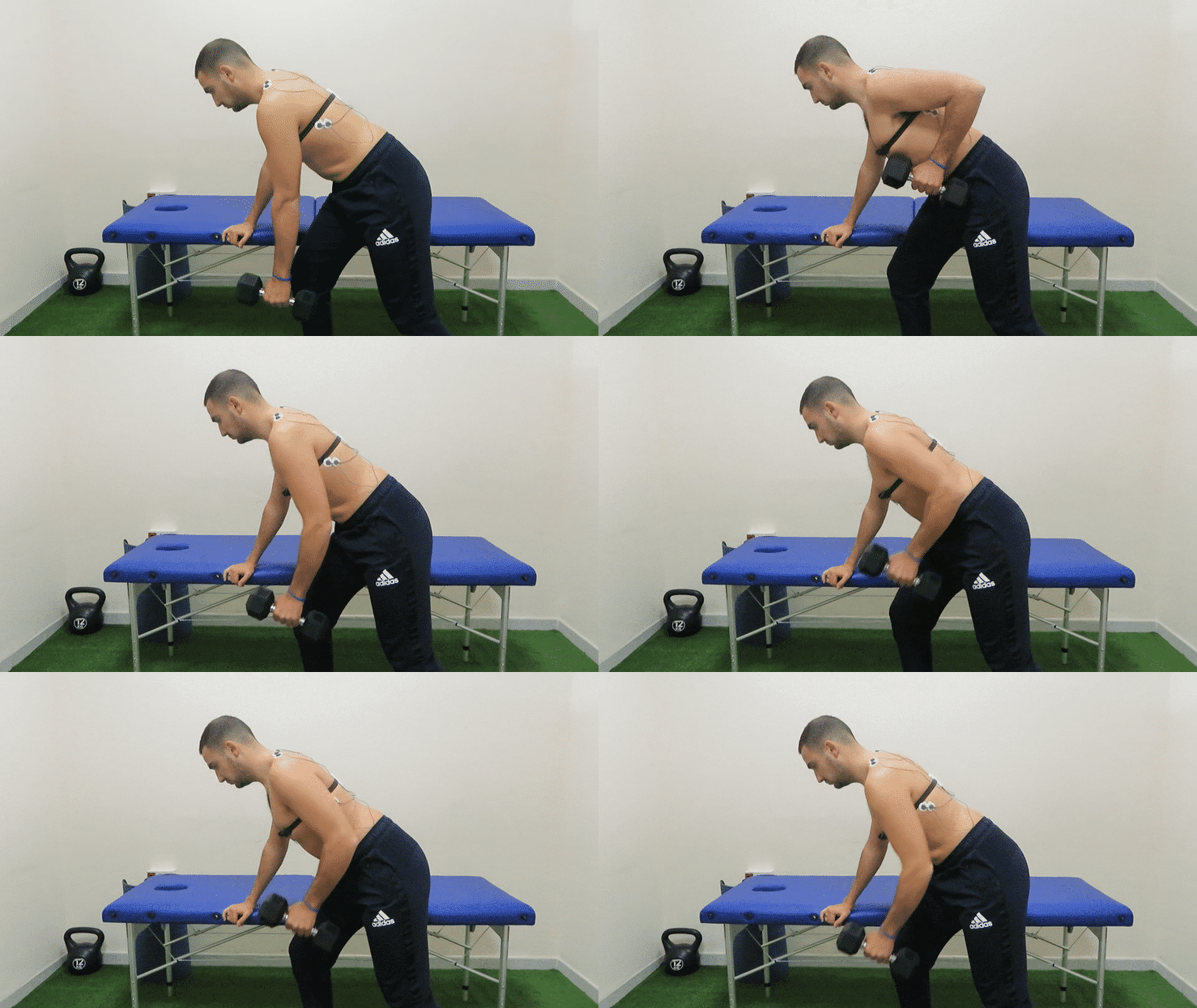
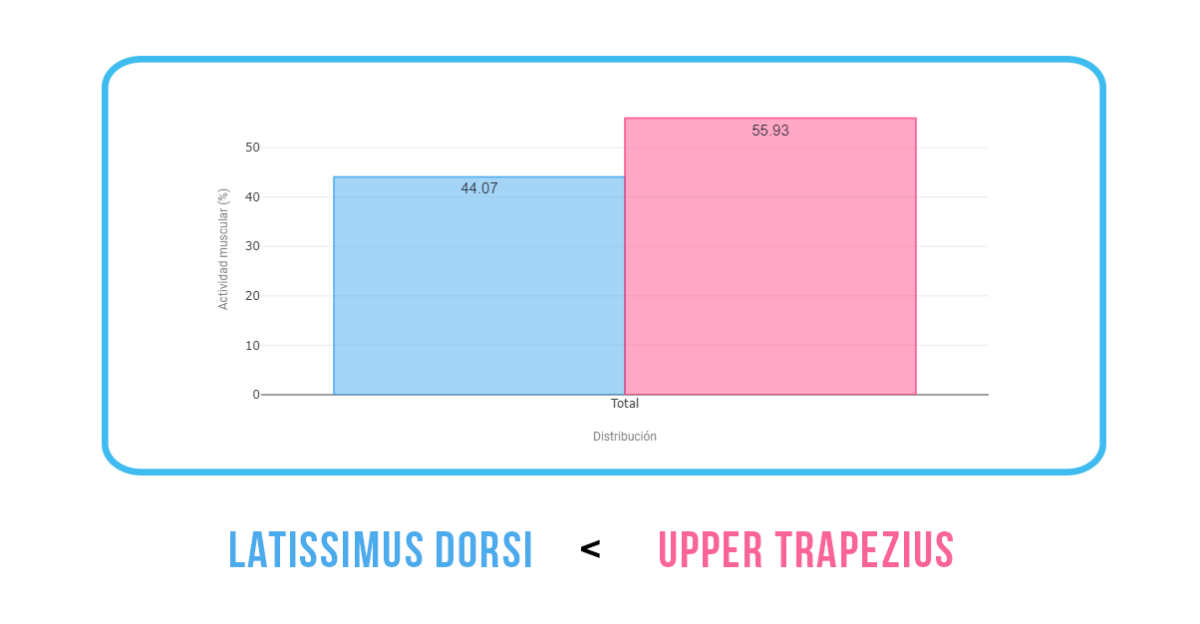
In clinical practice, it is very common for the dumbbell not to follow an optimal trajectory toward the hip (which would favor lat activation), but instead move more vertically toward the chest or even the shoulder. When this happens, the movement stops being primarily shoulder extension and adduction, key functions of the latissimus dorsi, and instead involves greater scapular retraction and elevation.
This higher trajectory forces the upper trapezius to intervene more intensely to stabilize and elevate the scapula. The result is an activation pattern where the upper trapezius dominates over the latissimus dorsi. In patients with chronic neck pain, this reinforces exactly the imbalance we are trying to correct.
Additionally, performing rows in standing requires trunk and scapular stabilization in a less controlled environment. If the patient already tends to elevate the shoulder or “pull with the neck,” the added load may amplify that compensation.
For this reason, before choosing an exercise simply because it is popular or traditional, it is essential to analyze which muscle is actually leading the movement. In certain patient profiles, the dumbbell row may reinforce upper trapezius hyperactivity rather than effectively stimulating the latissimus dorsi.
Consequences of Altered Synergy: Upper Trapezius > Latissimus Dorsi
This leads to:
- ❌ Excessive scapular elevation.
- ❌ Unnecessary cervical activation.
- ❌ Repeated compression in the upper region.
- ❌ Lack of effective scapular depression.
In these cases, the latissimus dorsi does not receive the primary stimulus and the trapezius continues reinforcing its hyperactivity.
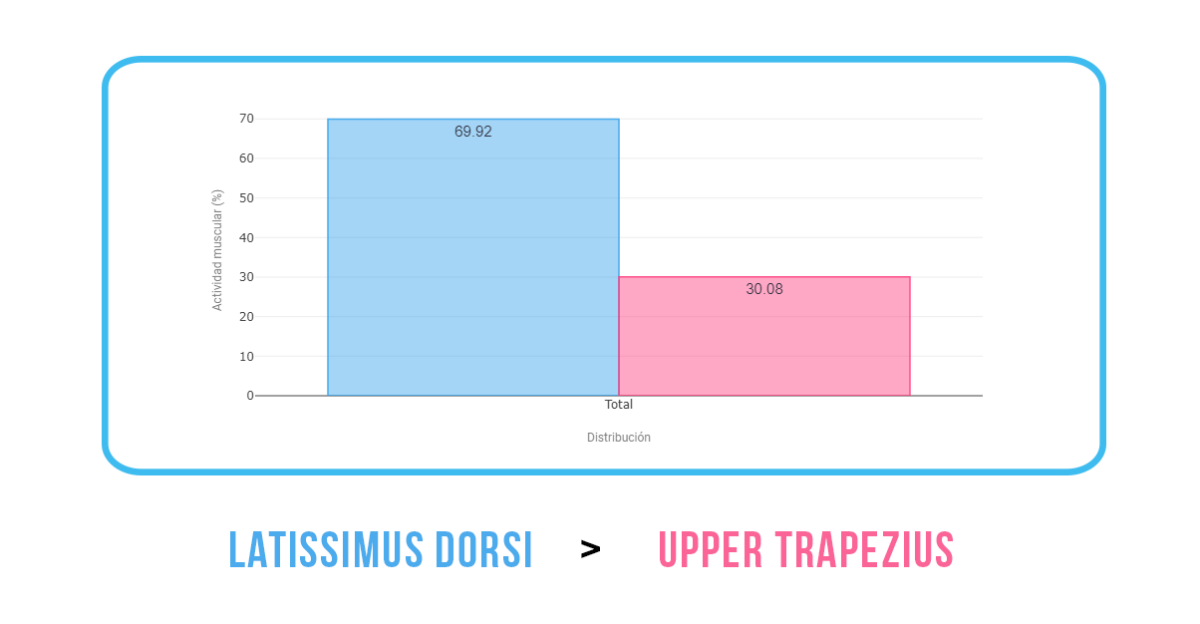
That’s why we need exercises where the synergy becomes:
✅ Latissimus dorsi > Upper trapezius
What You Should Look for in Exercises for These Patients
Before selecting an exercise, ask yourself:
- 1. Does it reduce the need for cervical stabilization?
- 2. Does it facilitate scapular depression?
- 3. Does it minimize shoulder elevation?
- 4. Does it allow the patient to focus on the latissimus dorsi without activating neck muscles?
The following three exercises meet these criteria.
Exercise 1: Side-Lying Resistance Band Row
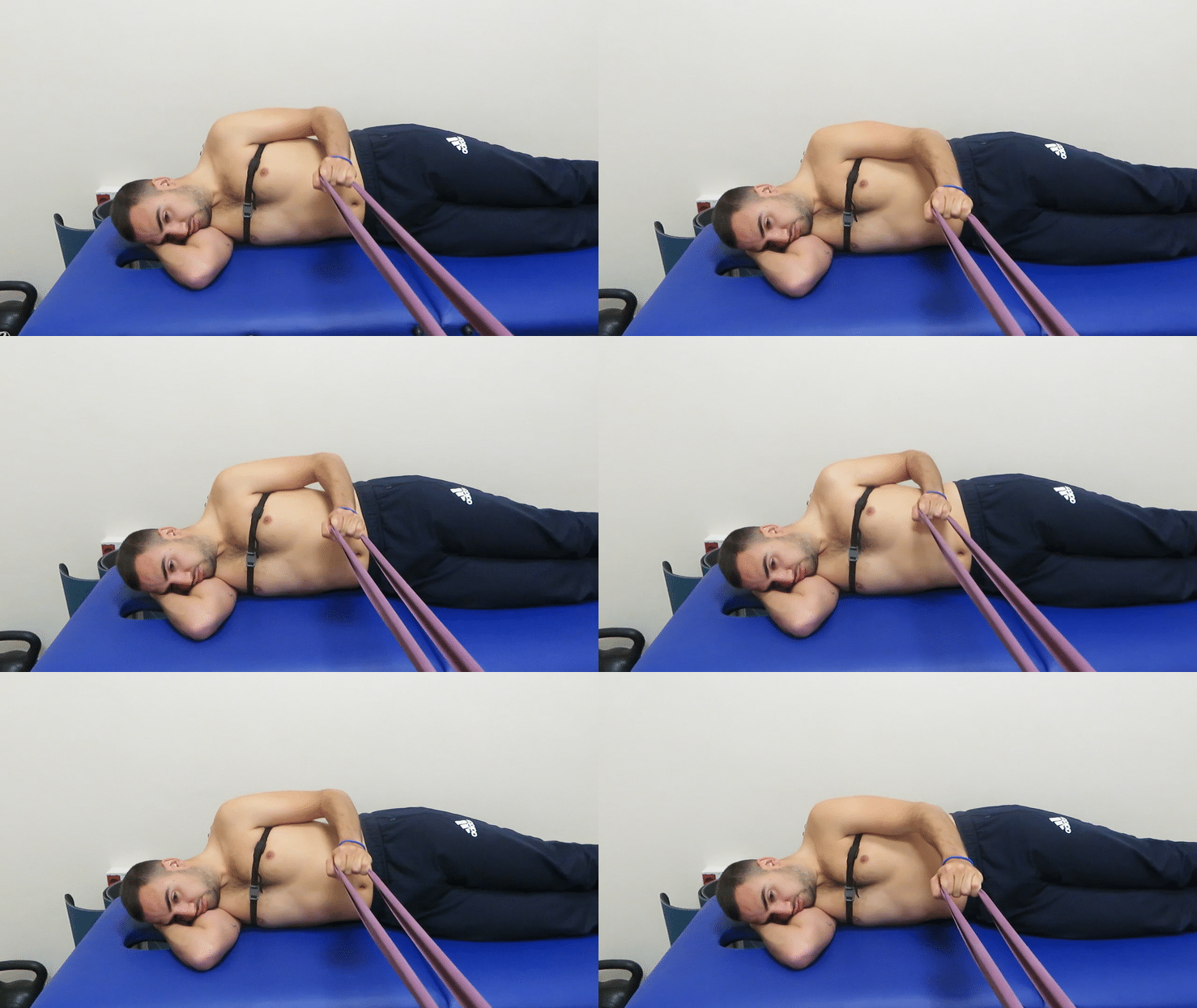
This exercise completely changes the mechanics compared to the traditional row.
Why It Works
The side-lying position reduces axial load on the cervical spine, decreasing compensatory activation of the upper trapezius.
Contact with the floor provides clear proprioceptive feedback, helping the patient better perceive scapular and trunk positioning.
It limits involuntary shoulder elevation, a very common compensation in patients with cervical overload.
It also promotes more controlled scapular retraction and depression, allowing the latissimus dorsi to take the primary role.
Clinical Benefits
- – Improves scapular stability in a more guided and stable environment.
- – Reduces unnecessary upper trapezius activation, decreasing neck and shoulder tension.
- – Excellent option during early rehabilitation stages when vertical loading is not yet tolerated.
- – Allows strengthening without aggravating cervical symptoms.
Especially useful for patients with chronic neck pain who cannot yet tolerate standing exercises or high postural stabilization demands.
Exercise 2: Supine Kettlebell Pullover
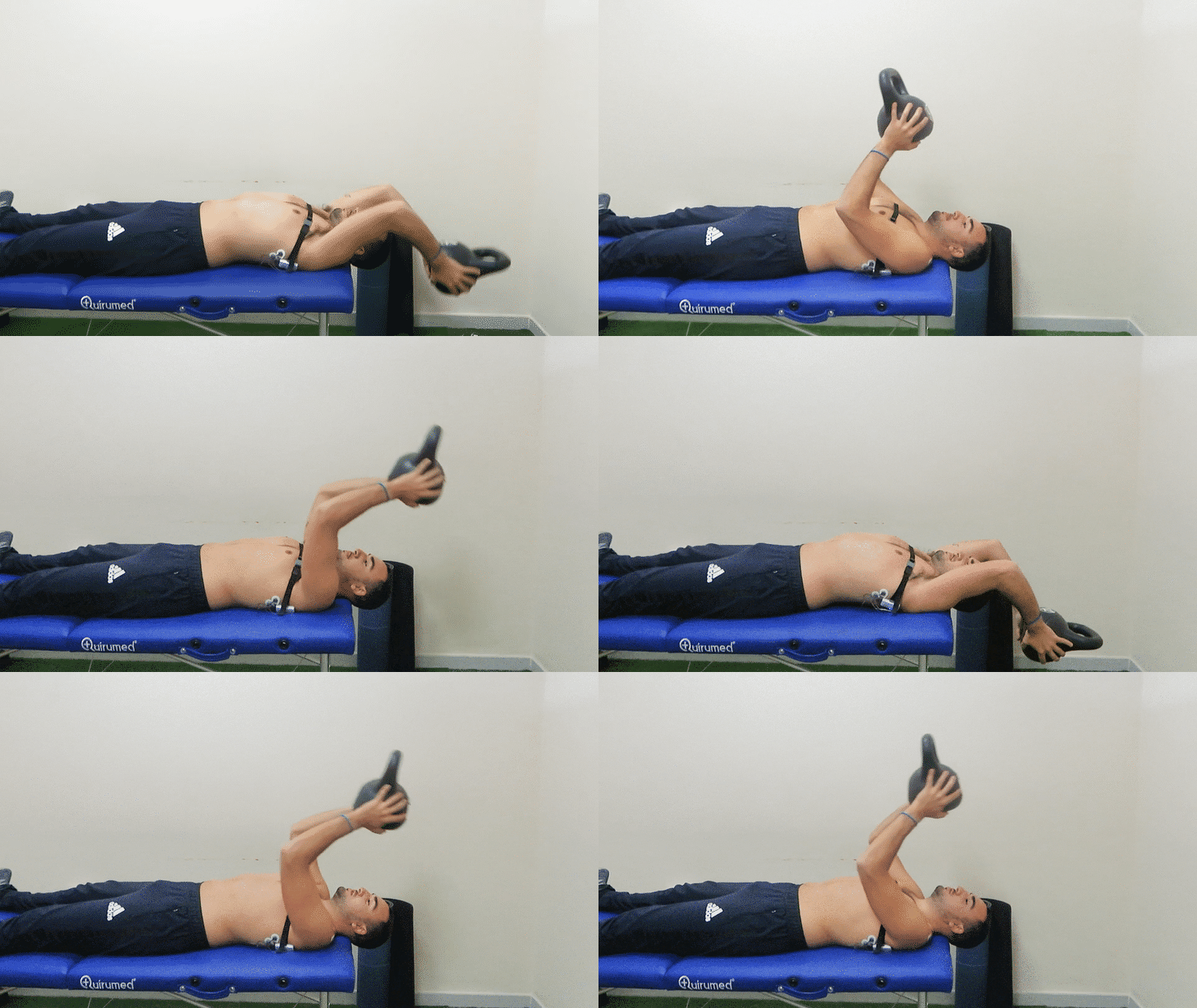
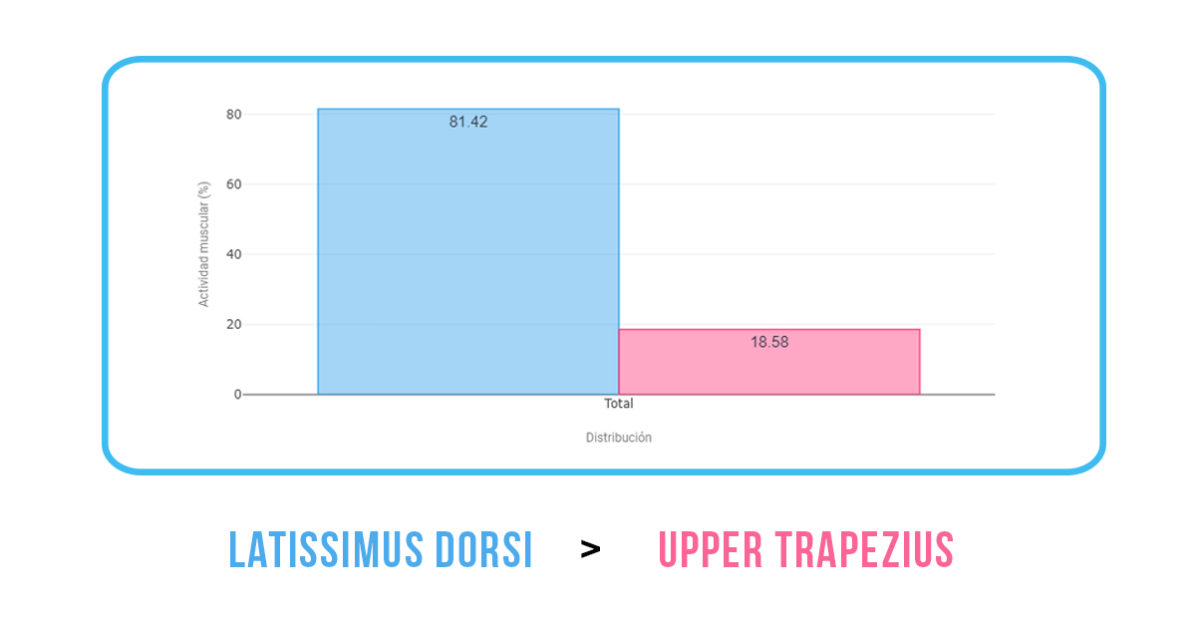
The floor pullover is an excellent tool for retraining lat activation without provoking cervical tension.
Why It Works
Floor support significantly reduces lumbar and cervical compensations by limiting excessive spinal extension and involuntary shoulder elevation.
The kettlebell forces better control of movement trajectory. Without a fixed bar, the patient must actively stabilize the shoulder, improving execution quality.
The pullover motion promotes shoulder extension and adduction, primary functions of the latissimus dorsi, helping this muscle become the main driver of the exercise.
Clinical Advantages
- – Reduces the need for upper trapezius activation, especially in patients who elevate the shoulder under load.
- – Allows lat training in a stable, controlled environment.
- – Very appropriate during early strengthening or rehabilitation phases.
- – Easy to dose and progress by adjusting load or range of motion.
Patients usually perceive lat activation more clearly in this position, improving body awareness and motor pattern re-education.
Exercise 3: Resistance Band Pullover
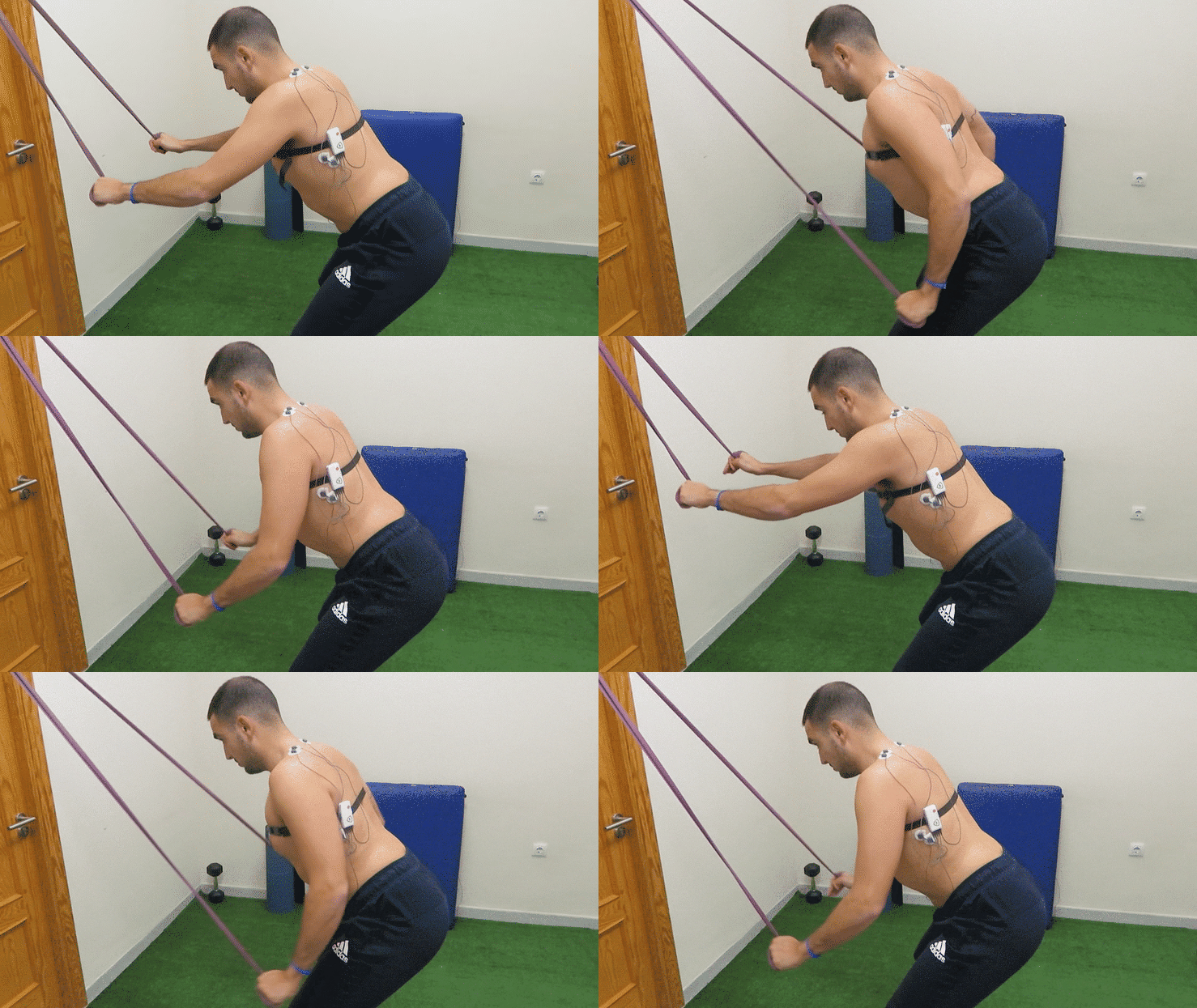
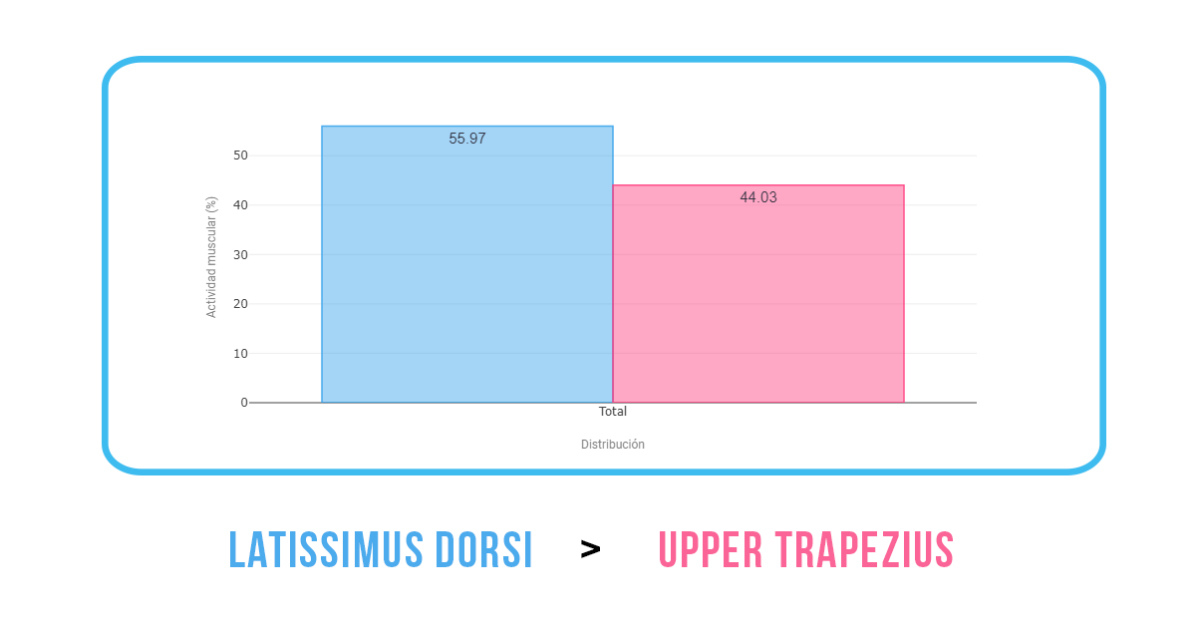
A very versatile variation suitable both in clinic and at home.
Why It Works
Elastic resistance creates a progressive loading curve, increasing tension as the movement progresses and promoting a more controlled stimulus for the latissimus dorsi.
It allows precise control of the force vector direction, emphasizing shoulder extension and adduction without unnecessary scapular elevation.
It also reduces excessive cervical stabilization demands, decreasing the likelihood of upper trapezius compensation.
Practical Benefits
- – Adaptable to any level, from early stages to advanced strengthening.
- – Easy progression by increasing band tension, modifying anchor position, or adjusting range of motion.
- – Improves scapulohumeral coordination, enhancing the relationship between scapula and humerus.
- – Excellent option for home exercise programs requiring minimal equipment and space.
Particularly useful for patients needing continuity outside the clinic without direct supervision.
What Happens When You Choose the Wrong Exercise
When you train the latissimus dorsi using exercises that excessively activate the upper trapezius, the problem is not solved, it is reinforced.
You reinforce cervical hyperactivity, which likely caused the pain in the first place. The upper trapezius continues taking on more load than it should.
At the same time, the dysfunctional pattern persists. The nervous system repeats the same compensatory strategy over and over, consolidating the imbalance.
This results in greater perceived tension, increased neck and shoulder stiffness, and a constant feeling of overload after training.
And most importantly: recovery is delayed. The patient may leave the session feeling worse than when they arrived, reducing confidence and treatment adherence.
It’s not just about strengthening.
It’s about strengthening with the correct muscle.
How to Make Sure You’re Activating the Latissimus Dorsi, Not the Trapezius
The only way to know for sure is to measure it.
Surface electromyography allows you to see which muscle is actually activating during exercise, beyond what appears visually.
You can compare latissimus dorsi activation against upper trapezius activity and quickly detect compensations. It also allows real-time technique adjustments by correcting trajectories, positions, or loads until the proper pattern is achieved.
Most importantly, it helps you choose the most appropriate exercise for that specific patient, not just the one that works in theory.
Because not all patients compensate the same way.
And not all exercises work equally in every case.
Conclusion
If your patient presents upper trapezius overload, chronic neck pain, or persistent neck and shoulder tension, exercise selection must be especially careful.
Not all back exercises are appropriate in these cases. Some may reinforce cervical hyperactivity instead of correcting it.
The three exercises presented promote a better muscular relationship:
Latissimus dorsi > Upper trapezius
And that is exactly what you need when a scapulocervical imbalance exists.
The goal is not only to strengthen.
It is to strengthen without worsening symptoms, re-educate without overloading, and progress without reinforcing dysfunction.
If you want to learn how to measure and optimize these synergies in your clinic, contact us here and we’ll show you how to integrate EMG into your sessions without adding extra time.