Are you using planks with your patients to work the core without knowing which one activates the transversus abdominis the most?
Not all planks are equal, and the difference between the most effective and the least is not minor: almost double the activation in the same exercise.
The transversus abdominis is the deepest muscle of the abdominal wall and the primary stabiliser of the lumbar spine. Training it is key in low back pain rehabilitation programmes, postpartum reconditioning and injury prevention in athletes. The problem is that you cannot know how much you are activating it with each variation without measuring it.
In this article you will discover which plank activates the transversus abdominis the most according to EMG data, which body position explains those differences and how to use that ranking to design more effective core programmes.
Why the transversus abdominis and not the rectus abdominis
The transversus abdominis is the muscle that contributes most to segmental stabilisation: it acts as an internal corset that increases intra-abdominal pressure and stabilises the lumbar spine before limb movement occurs.
Training it with exercises that generate high activation in that specific muscle (and not only in the rectus abdominis or the obliques) is what distinguishes an effective core programme from an ineffective one.
The problem is that the transversus is deep. It cannot be assessed reliably through observation or superficial palpation. Correctly positioned surface EMG can give you that data objectively.
The ranking: 5 plank variations measured with EMG
🥇 1st – Front plank with left leg raised horizontally
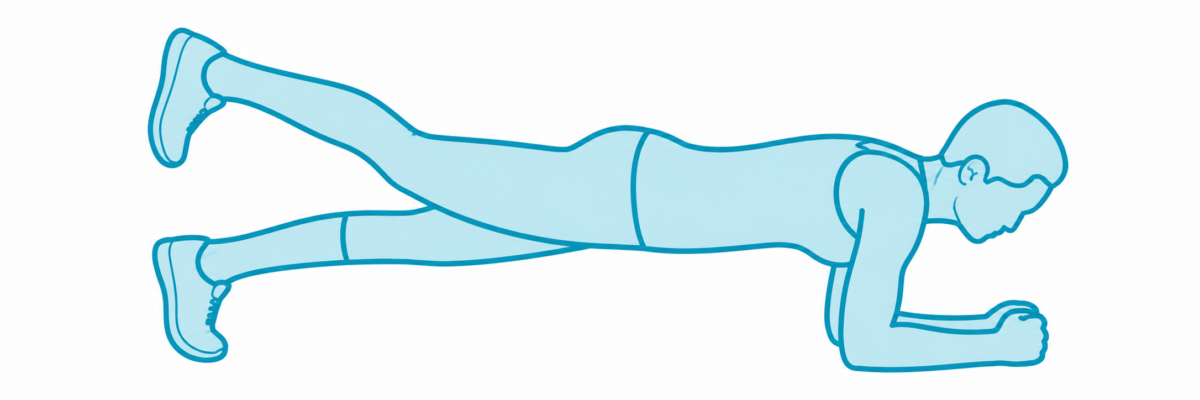
Transversus abdominis activation: 49% MVC
The plank with horizontal leg raise is the variation that activates the transversus abdominis the most in this ranking. The reason is biomechanical: raising one leg horizontally shifts the centre of gravity and the system must actively compensate for that imbalance. That additional stabilisation demand is what drives transversus activation upward.
It is a demanding exercise that requires prior control of the standard plank. In rehabilitation, it is indicated in advanced phases when the patient has already consolidated the activation pattern in lower-demand variations.
🥈 2nd – Side plank with leg raise
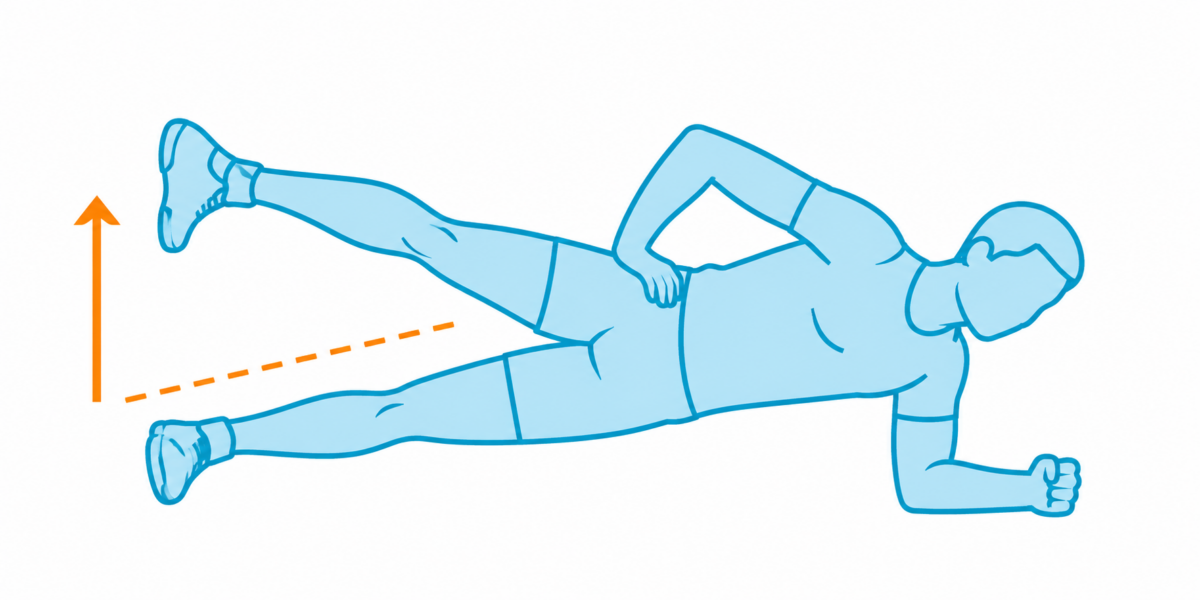
Transversus abdominis activation: 48% MVC
The side plank with leg raise reaches almost the same activation level as the first position. Here the challenge is different: the working plane is lateral and the demand on the quadratus lumborum, external oblique and transversus is very high to keep the hip elevated and control the leg movement.
It is especially useful for working lateral lumbar spine stability and the synergy between the transversus and the gluteus medius, which also activates in this position to control hip abduction.
🥉 3rd – Bridge with leg raise
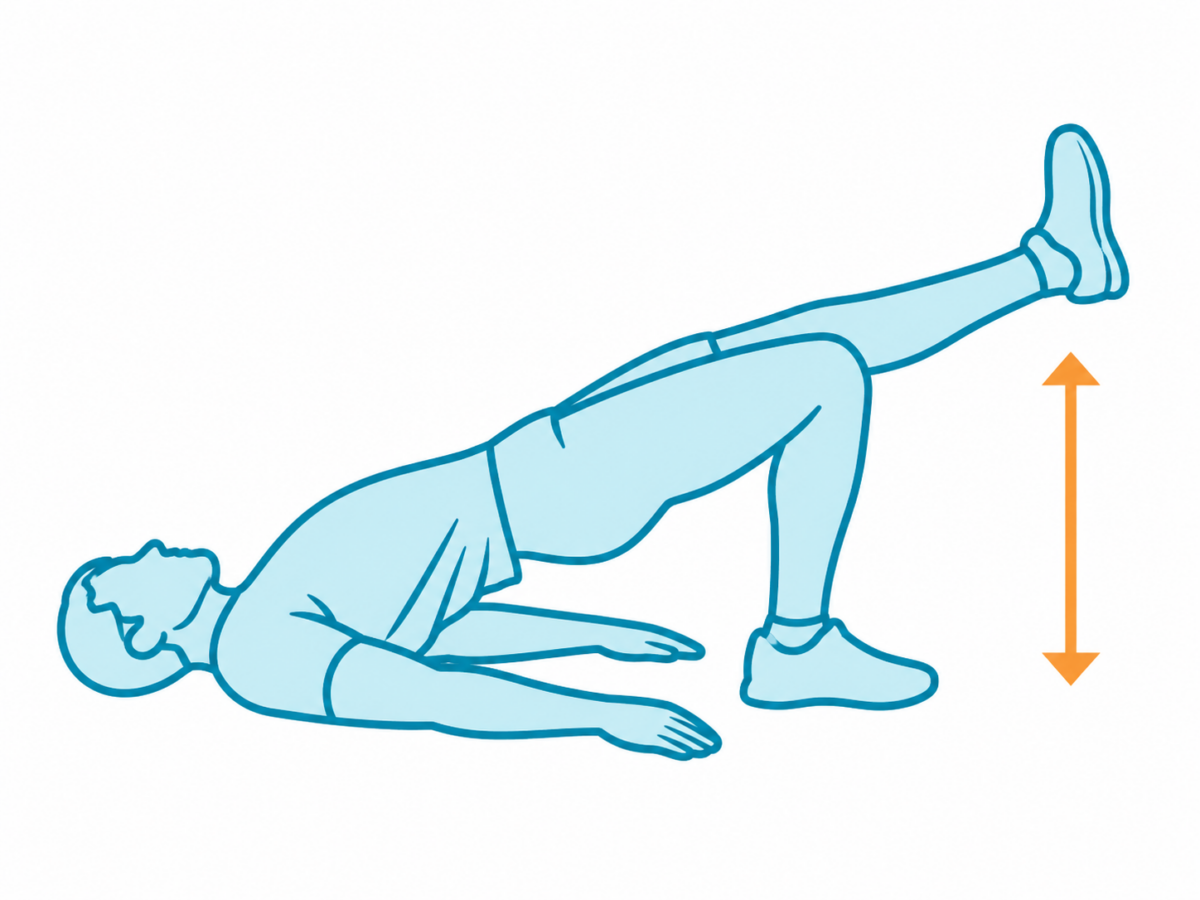
Transversus abdominis activation: 41% MVC
The bridge with leg raise offers 41% transversus activation. In the supine position, the demand on the lumbar spine is lower than in prone variations, making it a more accessible exercise for early phases or patients with low load tolerance in unloaded positions.
The leg raise simultaneously activates the gluteus maximus, adding a lumbopelvic synergy component to the exercise.
4th – Standard front plank
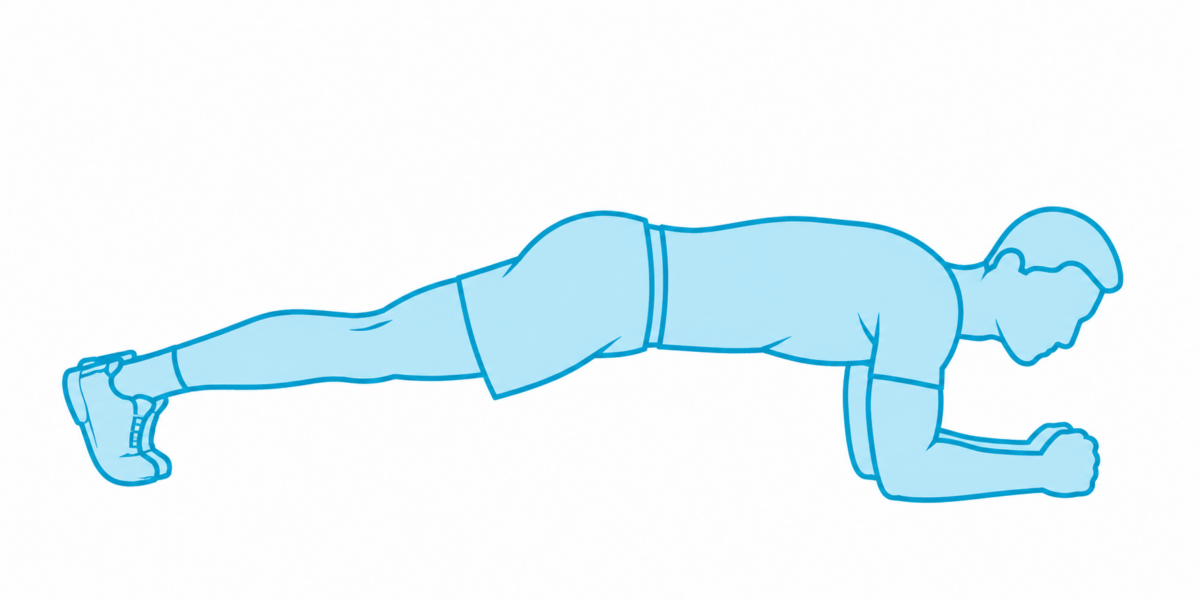
Transversus abdominis activation: 32% MVC
The standard plank generates 32% transversus activation. It is the reference exercise of the group and the usual starting point in core programmes. Its activation is not low in absolute terms, but it is clearly lower than the leg-raise variations.
What distinguishes the standard plank from the higher-ranked variations is the absence of perturbation: by maintaining four stable points of support, the active stabilisation demand is lower and the transversus does not need to activate as much.
5th – Bird dog
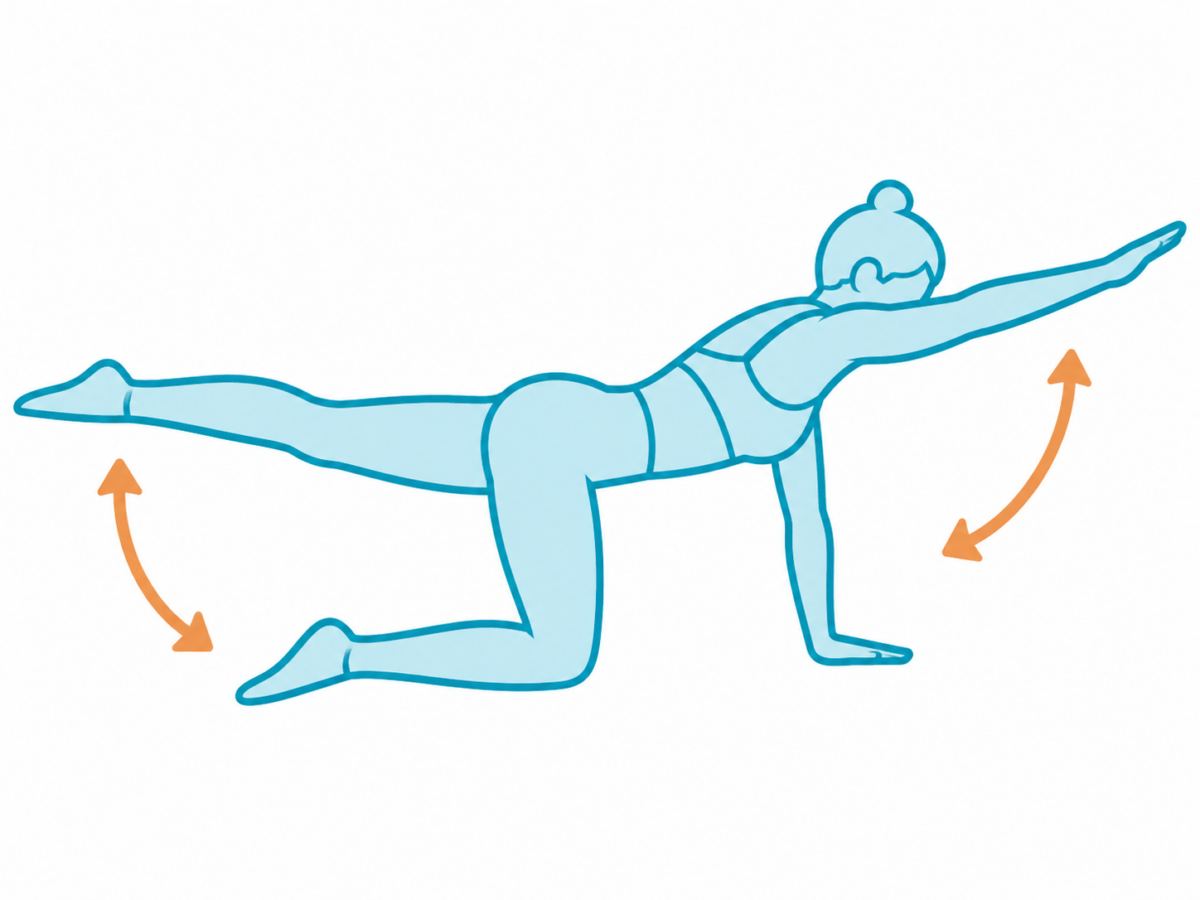
Transversus abdominis activation: 31% MVC
The bird dog closes the ranking with 31% activation. It is the exercise with the longest tradition in lumbar motor control programmes for its specificity in lumbopelvic dissociation and its low spinal load. However, in terms of absolute transversus activation, it generates the lowest demand of the five.
Its clinical value lies not in the magnitude of the activation but in the movement pattern it requires: simultaneous contralateral hip and shoulder extension while maintaining a neutral spine. This makes it especially useful in the early stages of motor control training.
Frequently asked questions
Does the transversus abdominis activate equally in all patients during the plank? No. The level of activation varies depending on prior motor control, fatigue, pain tolerance and the ability to dissociate abdominal activation from rectus femoris or spinal erector compensation. EMG allows you to detect those individual differences and adjust the exercise or technical instruction based on what is really happening in each patient.
Why does the side plank with leg raise activate the transversus almost as much as the front plank with leg raise? Because in both cases the system faces a balance perturbation that forces the transversus to increase its activation to maintain spinal stability. The exercise plane is different, but the active stabilisation demand is similar. In clinical practice, this means you can choose between both variations based on the patient’s tolerance and programme goal without sacrificing effectiveness on the transversus.
When does it make sense to measure the transversus with EMG rather than using observation alone? Observation allows you to detect visible compensations: hyperlordosis during the plank, hip elevation in the bird dog, trunk rotation during the side plank. But it does not tell you whether the transversus is activating or whether the spinal erectors are compensating for its function. EMG adds that layer of information that observation cannot provide, especially in patients with chronic low back pain where compensatory patterns are frequent and not always visible.
Conclusion
Not all planks activate the transversus abdominis equally. The EMG data are clear: the front plank with leg raise (49%) almost doubles the activation of the bird dog (31%). And that difference has a direct impact on the effectiveness of the rehabilitation or prevention programme you are designing.
The ranking gives you the foundation for building a progression based on data, not estimates. But its real value emerges when you can verify, in your own patient, that the exercise is generating the activation you expect at each phase of the process.